Mental Health
Women’s health after 30
After 30, women may experience gradual changes in metabolism, hormones, fertility, muscle strength, and bone health. Fertility can decline with age, while lifestyle factors may influence weight, energy, and metabolic health. A balanced diet rich in protein, calcium, iron, and essential nutrients, combined with regular walking and strength training, supports wellness. Routine health checks and age-appropriate screenings help identify concerns early and encourage healthier choices also.
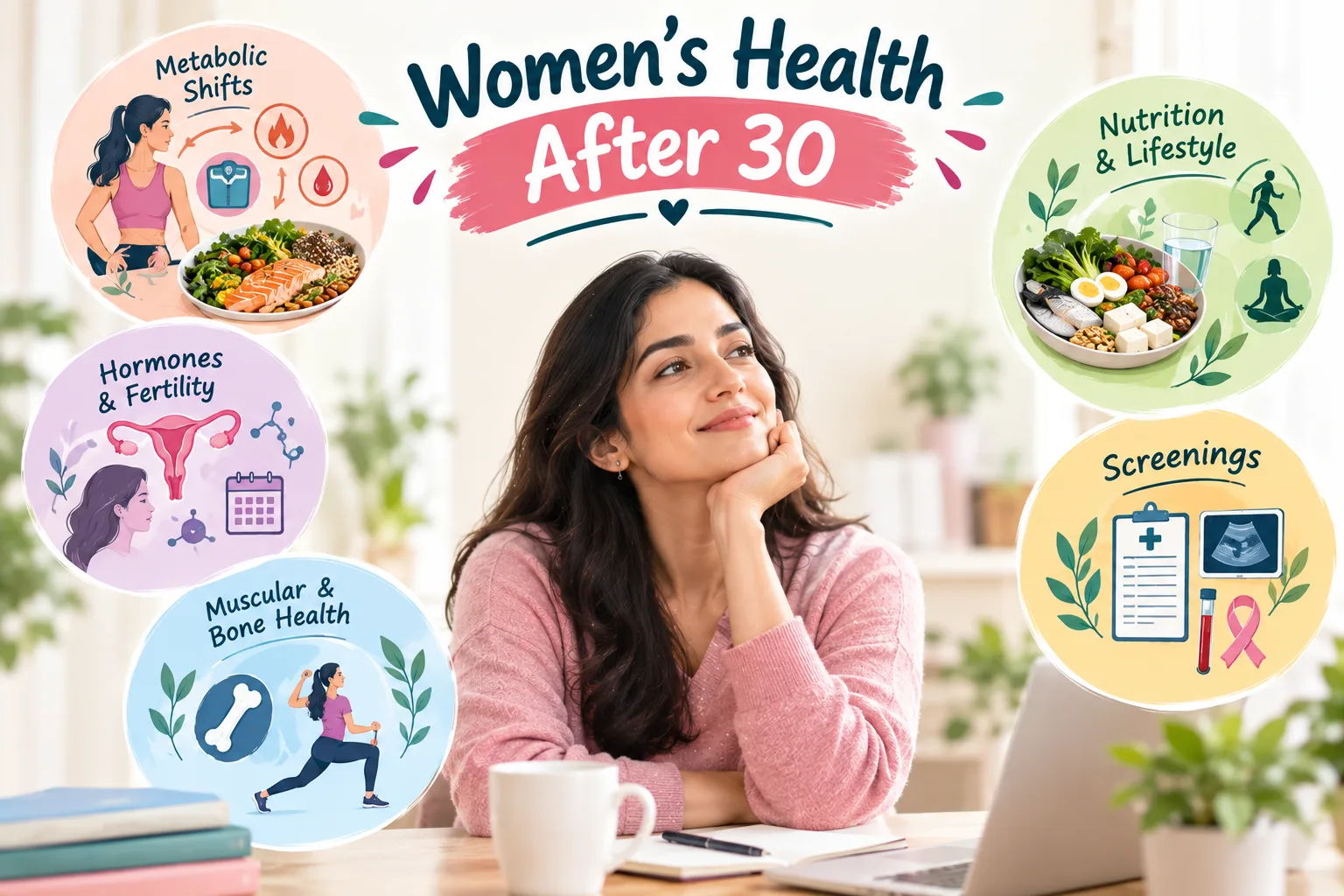
A female body carries several complexities within itself and even more so, experiences novel changes by each decade. Women over thirty years of age generally become vulnerable to issues like anemia, decreased fertility, hormonal shifts, metabolic instability and so on. Some of key areas of focus include:
Key Metabolic shifts:
Metabolism is a phenomenon in which the food consumed is converted into energy that can be expended. Resting metabolic rate decreases by 1-2% in women after 30. An unhealthy lifestyle can increase the risk in almost 50% of women over 35 years of age. Instability in work-life balance, sedentary jobs lead to increase in visceral fat storage by 49.3%. Genetic predisposition, fried food can accelerate these changes. Prevalence of metabolic syndrome, which is a group of metabolic abnormalities leading to cardiovascular diseases and diabetes, has increased by 30-57%.
Hormones and Fertility:
There is a gradual decrease in hormones such as Estrogen and Progesterone, there is a progesterone drop due to stress induced cortisol release which may further lead to Insulin resistance, PMS like symptoms,heavier periods, mood swings. Fluctuations in estrogen causes fatigue, anxiety and hip weight gain affecting skin elasticity, bone health, and libido. Fat redistributes centrally due to falling estrogen, amplifying visceral storage amid high-carb diets and stress. Moreover specific stressors may lead to thyroid risk. There is a fluctuation in menstrual cycles, with 20-30% experiencing perimenopause symptoms like painful periods or spotting by late 30s; increased fibroid/PCOS risks tied to estrogen shifts, alongside vaginal dryness and incontinence from tissue thinning. Fertility peaks in the 20s and drops gradually by 35 due to diminished ovarian reserves, non viable eggs and irregular cycles.
Muscular and Bone health:
Sarcopenia is muscle loss, usually begins post thirty years of age, much faster in post- menopausal women. It occurs due to fall in estrogen, vitamin D deficiency, it can be compounded by anemia and low activity. Similarly, bone density starts to decline after the age of 35. Women getting closer to menopause are prone to frequent fracture and pains related to bones and muscles.
Nutrition and lifestyle:
Women must prioritize a calcium and protein rich diet post thirty years. Including foods like greens,eggs, paneer, sesame seeds, fish, curd can regulate overall well being. Practising a non sedentary lifestyle, by walking, strength training and other forms of exercise not only improves physical health but mental well being too.
Screenings :
Regular screenings are advised for keeping track of any slight abnormality. Post thirty, getting an annual blood profile, lipid profile, cardiovascular assessment will help to plan a better routine for a healthier lifestyle. Pap smears, HPV testing every 3-5 years, ultrasound in case of painful periods, is important to track the cycles better.


