Nutrition
Calcium rich food
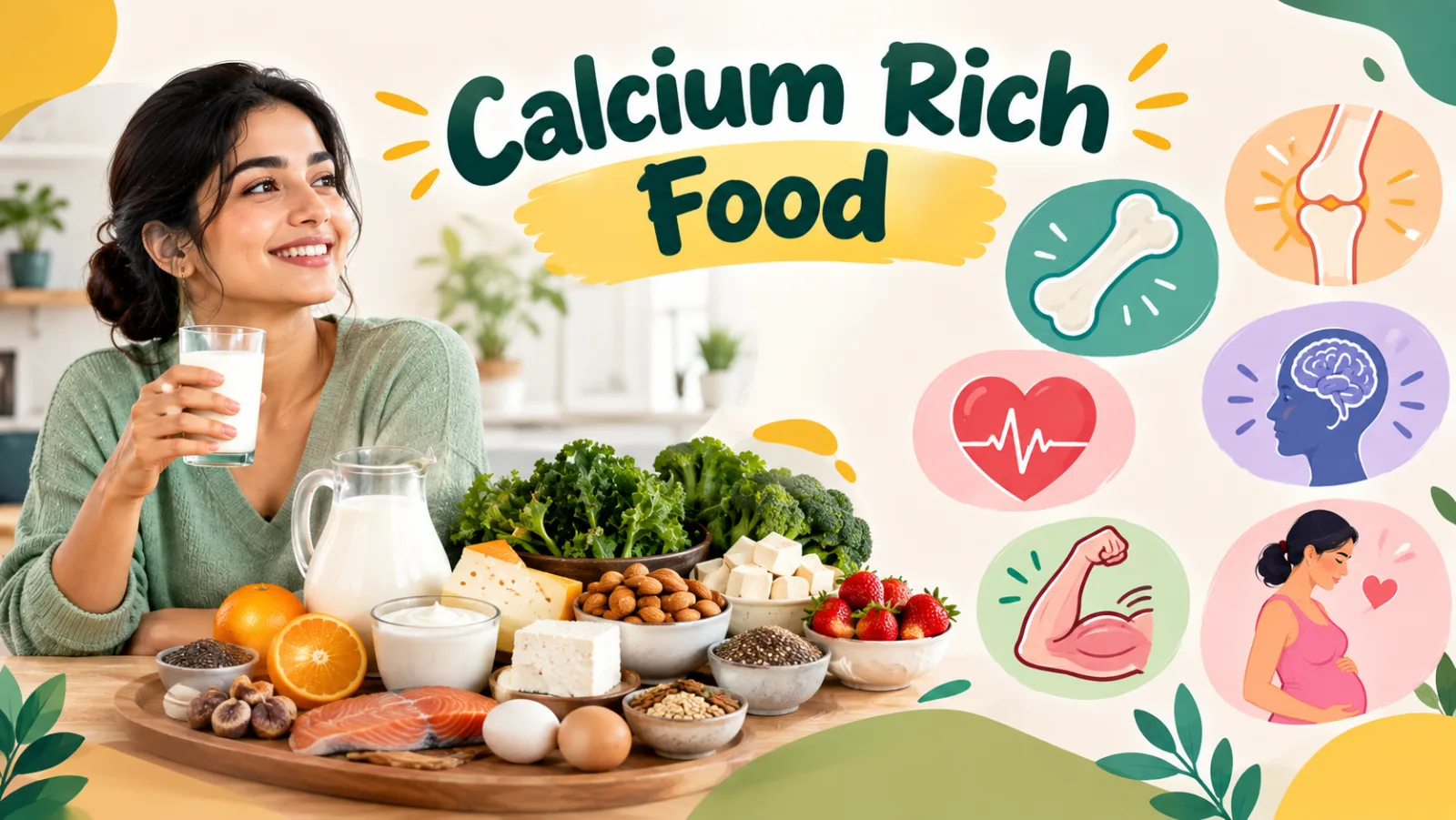
Calcium is essential for strong bones and teeth, but its role goes far beyond skeletal health. It supports muscle contraction, nerve function, blood clotting, heart rhythm, and hormone activity. Include calcium-rich foods such as milk, yogurt, cheese, ragi, tofu, leafy greens, sesame, chia seeds, almonds, fish, and eggs. Pair calcium with vitamin D and balanced meals to support absorption and bone health. A balanced diet can help prevent deficiency, fractures, and weak bones. long-term
Functions :
It is the most abundant mineral in the human body, and is essential for far more than just strong bones. It comprises about 1-2% of body weight, roughly 99% is present in bones and teeth, providing structural support and serving as a reservoir for metabolic needs. The remaining 1% circulates in blood and soft tissues, enabling functions like muscle contraction, nerve impulse transmission, blood clotting, and enzyme activity in processes such as hormone secretion. In some research from the 1980s it is also shown that calcium has a role to play in eclampsia and preeclampsia, hypertensive conditions during pregnancy. Many countries in Asia have an average dietary calcium intake of less than 500 mg/day. Blood pressure is improved when calcium intake is increased to reach the recommended levels. Dietary calcium may decrease serum cholesterol by inhibiting cholesterol and saturated fatty acid absorption. Protective effects of dietary calcium in gut absorption and colorectal cancer have been observed in some studies. Calcium regulates heart rhythm and tone. It supports hormone functions, including parathyroid hormone and bone remodeling.
Daily requirements and food:
Dietary reference values for individuals over 19 years of age vary from 1000 mg to 1300 mg. Dietary intake upper limit for pregnant women to 3000 mg/day for those aged 14 to 18 years and to 2500 for older ones. Deficiency risks osteoporosis, fractures,postmenopausal women lose 1-2% bone yearly, muscle cramps, tetany, and rickets in children. Milk 300 mg/cup, yogurt 450 mg/cup, cheese (Parmesan, Cheddar, Ricotta).Leafy Greens like cooked kale, greens 266 mg/cup, bok choy, and broccoli pair it along with fruit rich in vitamin c like oranges, strawberries for better absorption.Soy Products like tofu 350 mg per half cup, soy milk, edamame, and tempeh. Seeds and Nuts include Sesame seeds, chia seeds, and almonds. Ragi, makhana, anjeer, fish, red meat, eggs are some of the commonly used Indian alternatives. Avoid excessive consumption of coffee or tea especially with meals, better take them after two hours of eating meals. Soaking seeds and nuts reduces anti-nutrients (phytates) that block absorption of calcium.
Absorption:
Maximize calcium absorption through dietary intake by pairing it with vitamin D, magnesium, vitamin K-rich foods like eggs, milk, red meat, dark chocolate, walnuts, avocado, spinach. In Indian vegetarian routines, combine curd-rice with greens, mushrooms. Extend the sun exposure time by 10-15 minutes between 11am to 2pm. Indians predominantly have darker skin due to which they need to spend more time in the sun to produce large amounts of vitamin D.
Consult a doctor if there are prolonged symptoms of muscle or bone pain, dental carries, frequent fractures, cognitive dysfunction like memory issues, depression, extreme fatigue.
Gewo health
Small changes, disciplined routines can go a long way in maintaining a healthy body, consult doctors at GEWO health for personalised guidance and support.


