Wellness
Women’s Health Through Different Life Stages
Women’s health changes through every stage of life — from puberty and reproductive years to pregnancy, menopause, and beyond. This article explains how hormones, mental health, nutrition, and lifestyle influence wellbeing across different phases of womanhood. It highlights the importance of understanding body changes, recognizing symptoms early, prioritizing emotional health, and seeking care without shame.
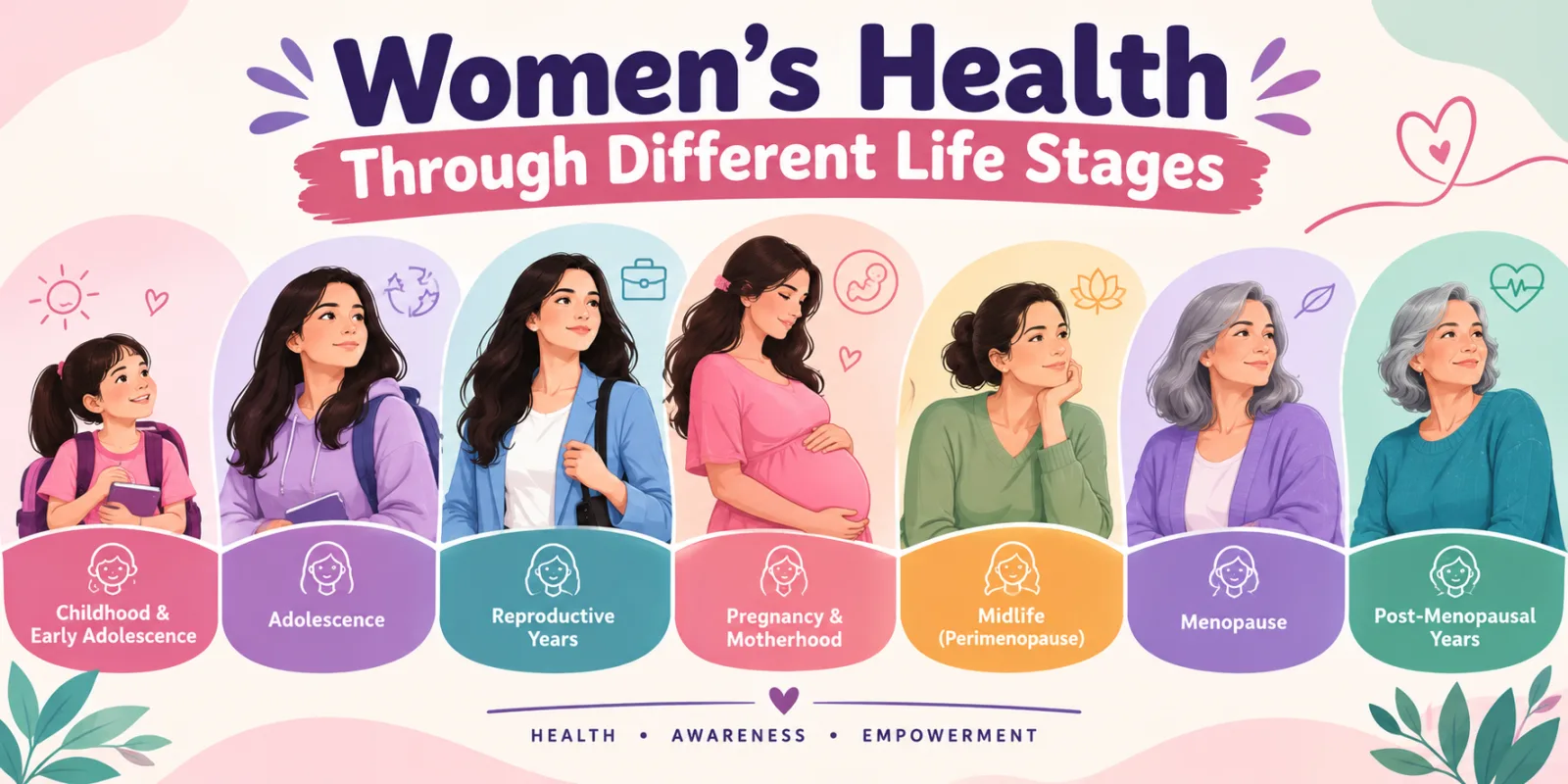
Women’s Health Through Different Life Stages
A woman’s body does not stay the same — it evolves. What it needs at 12 is different from what it needs at 22, 32, or 52. Yet many women move through life without ever being told that health is not a single destination, but a series of transitions.
Women’s health is often reduced to reproduction, but in reality, it is about growth, hormones, mental wellbeing, strength, vulnerability, and care at every stage. Understanding these phases helps women listen to their bodies instead of fighting them.
Childhood & Early Adolescence: Laying the Foundation
Health begins long before periods start. In childhood, nutrition, sleep, physical activity, and emotional safety shape how the body develops later.
As puberty approaches, the body begins preparing quietly. Hormones rise, breasts develop, body shape changes, and emotional sensitivity increases. This phase can feel confusing, especially when conversations about the body are avoided.
The most important need at this stage is education without fear. Girls who understand what is happening feel less anxious and more confident. Menstrual health, personal hygiene, and body boundaries should be normal conversations—not hidden topics.
Mental health support is equally important. Adolescence is when self-image forms, and negative messages about the body can leave lifelong scars.
Reproductive Years (Late Teens to 30s): The Most Demanding Phase
This phase is often portrayed as a woman’s “best years,” but it is also the most demanding. Education, career building, relationships, family expectations, and emotional responsibilities often collide here.
Physically, hormones are at their peak. Periods become more regular, and fertility is highest—though fertility does not define a woman’s worth or purpose.
Yet this is also when many conditions begin to appear:
PCOS
Thyroid disorders
Endometriosis
Anemia
Mental health struggles
Stress, irregular sleep, poor nutrition, and emotional overload quietly disrupt hormonal balance. Many women normalize fatigue and pain, assuming it is simply part of being “busy.”
The key lesson of this stage is not ignoring symptoms. Early attention prevents long-term complications.
Pregnancy & Motherhood: Care Beyond the Baby
Pregnancy brings intense physical and emotional changes. Hormones rise dramatically as the body adapts to support another life.
Health in this stage should not be limited to checkups and scans. Emotional wellbeing, nutrition, rest, and social support matter just as much.
After childbirth, attention often shifts entirely to the baby. The mother is expected to “bounce back,” even as her hormones fluctuate and her body heals.
Postpartum mental health deserves recognition. Sadness, anxiety, exhaustion, or emotional numbness are not failures—they are signals that support is needed.
Caring for the caregiver is essential, not optional.
Midlife (Late 30s to 40s): When the Body Starts Whispering
This is a phase many women are unprepared for. Periods may still be regular, but the body begins sending subtle signals.
Energy levels shift. Sleep becomes lighter. Weight redistributes, often around the abdomen. Mood changes may appear without clear triggers.
This is often the beginning of perimenopause, though it is rarely discussed. Hormones fluctuate unpredictably.
At this stage, preventive care becomes crucial:
Regular health screenings
Bone health awareness
Cardiovascular risk monitoring
Mental health check-ins
Ignoring these whispers often allows them to grow into louder symptoms later.
Menopause: A Major Transition, Not a Disease
Menopause marks the end of menstruation, not the end of health, vitality, or purpose.
Estrogen levels decline, leading to symptoms such as:
Hot flashes
Vaginal dryness
Sleep disturbances
Mood changes
Bone density loss
Yet many women also experience emotional clarity and a sense of freedom from monthly hormonal cycles.
The most important need during menopause is accurate information. Myths and fear create more suffering than hormones do.
With proper medical care, lifestyle adjustments, and emotional support, menopause can be a stable—and even empowering—phase of life.
Post-Menopausal Years: Strength, Stability, and Self-Care
After menopause, health priorities shift again. Bone health, heart health, joint care, and mental wellbeing take center stage.
This is the phase where prevention truly matters. Regular exercise, balanced nutrition, and social connection protect independence and quality of life.
Emotionally, many women feel more grounded. There is less pressure to please others and more room to prioritize personal wellbeing.
Aging is not loss; it is evolution.
Mental Health Across All Stages
At every stage, mental health runs parallel to physical health. Hormonal changes influence mood, but emotional experiences also shape hormonal responses.
Women are often taught to endure silently, but emotional distress deserves the same attention as physical pain.
Seeking help is not weakness—it is self-awareness.
Women are taught how to sacrifice, adjust, and survive, but rarely taught how to listen to themselves.
Each life stage brings its own rhythm. Health is not about controlling the body, but understanding it.
When women are informed, supported, and respected, health becomes less about crisis management and more about continuous care.
Your body has been speaking to you all along.
Every stage deserves attention.
Every woman deserves care.
GEWO Health
“At GEWO Health, we help women tune into their bodies—because every stage of womanhood deserves clarity, compassion, and care.”


