Mental Health
Understanding Specific Learning Disorder: A Guide for Patients and Families
Specific Learning Disorder (SLD) affects how children learn reading, writing, or mathematics despite typical intelligence and appropriate learning opportunities. Common forms include dyslexia, dysgraphia, and dyscalculia. Signs may include academic difficulties, poor organisation, and frustration with schoolwork.
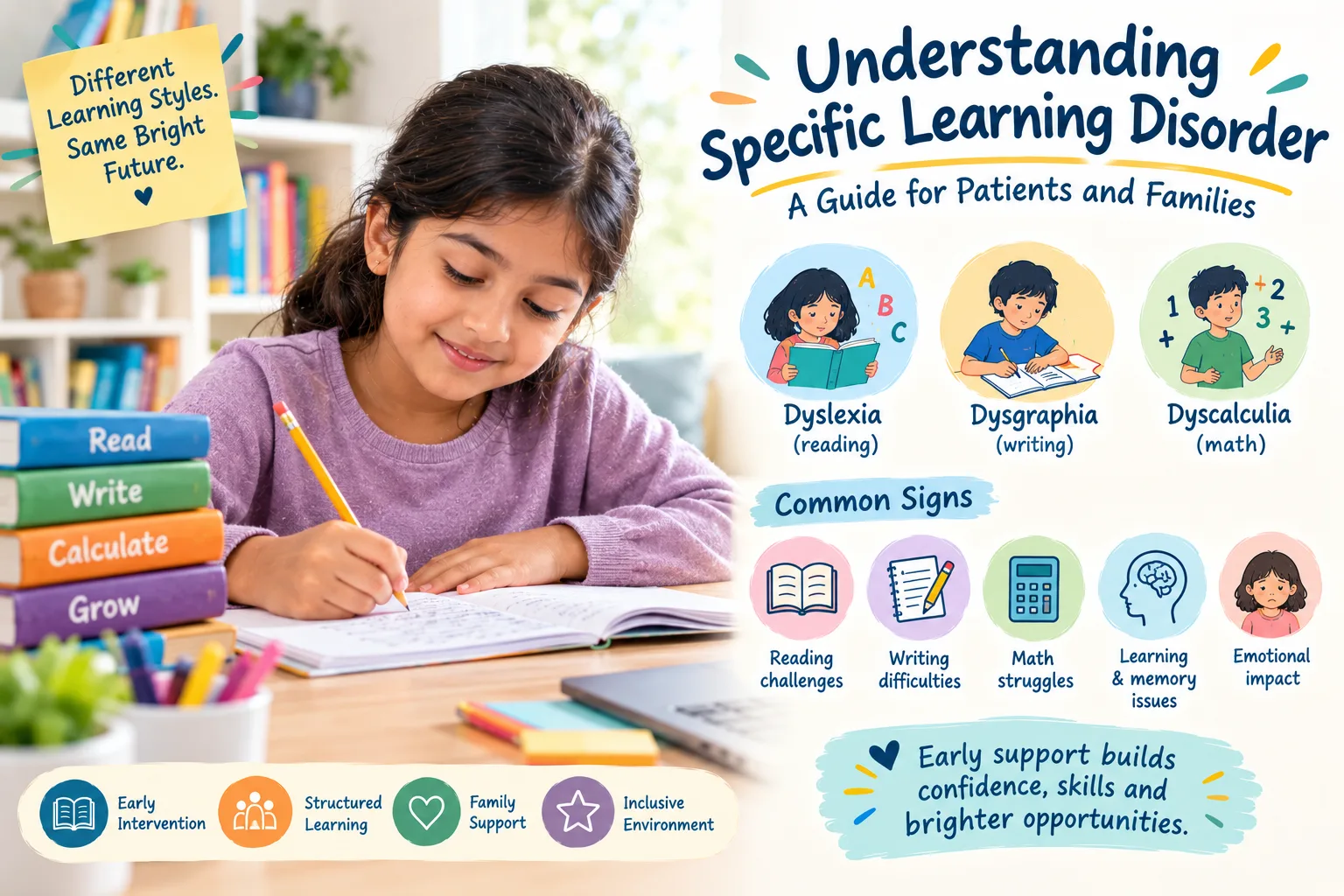
Specific Learning Disorder (SLD) is a common neurodevelopmental condition that affects how the brain processes information related to reading, writing, or mathematics, despite normal intelligence and adequate educational opportunities. Early recognition and evidence-based support can significantly improve academic outcomes and emotional well-being.
What Is Specific Learning Disorder?
Specific Learning Disorder is not a reflection of a child's intelligence or effort. Instead, it describes persistent difficulties in acquiring and using key academic skills. These challenges are specific, meaning a child may struggle significantly in one area (like reading) while performing well in others. SLD is typically identified during school years when academic demands increase, and it affects approximately 5-15% of school-aged children globally.
The condition is categorised into three main types: ● Dyslexia: Difficulty with accurate or fluent word recognition, poor spelling, and decoding abilities.
● Dysgraphia: Challenges with handwriting, spelling, and organising thoughts on paper.
● Dyscalculia: Trouble understanding number concepts, learning arithmetic facts, and performing calculations
Recognising the Symptoms:
Symptoms vary depending on the type of SLD and the child's age, but common signs include:
● Reading-related: Slow or inaccurate reading, difficulty sounding out words, avoiding reading aloud, poor reading comprehension.
● Writing-related: Messy handwriting, frequent spelling errors, trouble organising sentences or paragraphs, difficulty expressing ideas in writing.
● Math-related: Struggles with number sense, memorising math facts, understanding word problems, or following multi-step calculations.
● General academic signs: Trouble following instructions, difficulty remembering what was just heard, losing school materials, incomplete homework, or emotional reactions (frustration, anger) during academic tasks. Some children may also show poor coordination in sports or activities requiring fine motor skills, such as holding a pencil.
Causes and Risk Factors:
SLD arises from differences in brain structure and function that affect how information is processed. While the exact cause is not fully understood, several risk factors have been identified:
● Genetics: Having a parent or sibling with a learning disorder increases risk.
● Prenatal and early life factors: Poor fetal growth, exposure to alcohol or drugs before birth, premature birth, or very low birth weight.
● Environmental exposures: High levels of toxins like lead in early childhood.
● Neurological factors: Head injuries or nervous system illnesses in early development.
● Emotional trauma: Severe stress or emotional abuse in early childhood may affect brain development. It is important to note that SLD is not caused by poor teaching, lack of motivation, or socioeconomic status alone, though these factors can influence how severely symptoms affect a child's progress.
Prevention Tips:
While SLD cannot always be prevented, early action can reduce its impact:
● Promote early literacy: Read to children daily, encourage phonological awareness (rhyming, sound games), and engage in number play from a young age.
● Monitor developmental milestones: Keep track of speech, language, and motor development; discuss concerns with a pediatrician early.
● Ensure a healthy pregnancy: Avoid alcohol, drugs, and toxins; maintain good prenatal care.
● Create a supportive learning environment: Provide structured routines, positive reinforcement, and access to books and educational games.
● Screen early: Schools and pediatricians can help identify at-risk children before academic failure occurs.
When to Consult a Doctor?
Seek professional evaluation if your child:
● Consistently struggles with reading, writing, or math despite extra help at home.
● Shows a significant gap between their intellectual ability and academic performance.
● Avoids schoolwork, expresses frustration about learning, or shows declining self-esteem.
● Has difficulty following instructions, remembering information, or organising tasks. A pediatrician, psychologist, or educational specialist can conduct a comprehensive assessment, which may include cognitive testing, academic achievement tests, and observations of learning behavior.
Treatment and Support Options:
There is no "cure" for SLD, but evidence-based interventions can help children build skills and succeed academically.
● Specialized instruction: Structured, multisensory teaching methods—especially phonics-based programs for dyslexia—have the strongest evidence for improving reading and writing.
● Individualized Education Program (IEP): A formal plan that outlines learning goals, accommodations (e.g., extra time on tests), and special education services.
● Therapies: Speech-language therapy for phonological skills, occupational therapy for handwriting and organisation, and counseling for emotional support.
● Classroom accommodations: Preferential seating, use of audiobooks, speech-to-text software, and reduced-distraction environments.
● Emerging approaches: Some studies explore neurofeedback, eye-tracking tools, or brain stimulation, but these are not yet standard care and require more research. Medications are not used to treat SLD directly but may help if a child also has anxiety, depression, or ADHD.
GEWO Health Message:
At GEWO Health, we believe every learner deserves support tailored to their unique strengths. If you suspect a learning difference in your child, early assessment and compassionate, evidence-based intervention can make a profound difference. Remember: SLD is not a limitation, it's a different way of learning that, with the right tools, can lead to success.
Medical Disclaimer:
This article is for informational purposes only and does not constitute medical advice, diagnosis, or treatment. Always seek the guidance of a qualified healthcare provider or educational specialist with any questions regarding a child's learning or development. Never disregard professional advice or delay seeking evaluation because of something you have read here.


