Wellness
Dyspepsia: Understanding Indigestion
Dyspepsia, commonly known as indigestion, causes discomfort in the upper abdomen and may include burning, pain, early fullness, bloating, nausea, or belching. Symptoms can be linked to functional dyspepsia, H. pylori infection, ulcers, reflux, certain medicines, food triggers, or stress. Eating smaller meals, avoiding personal triggers, staying active, and managing stress may help. Persistent or recurrent symptoms should be evaluated by a healthcare professional.
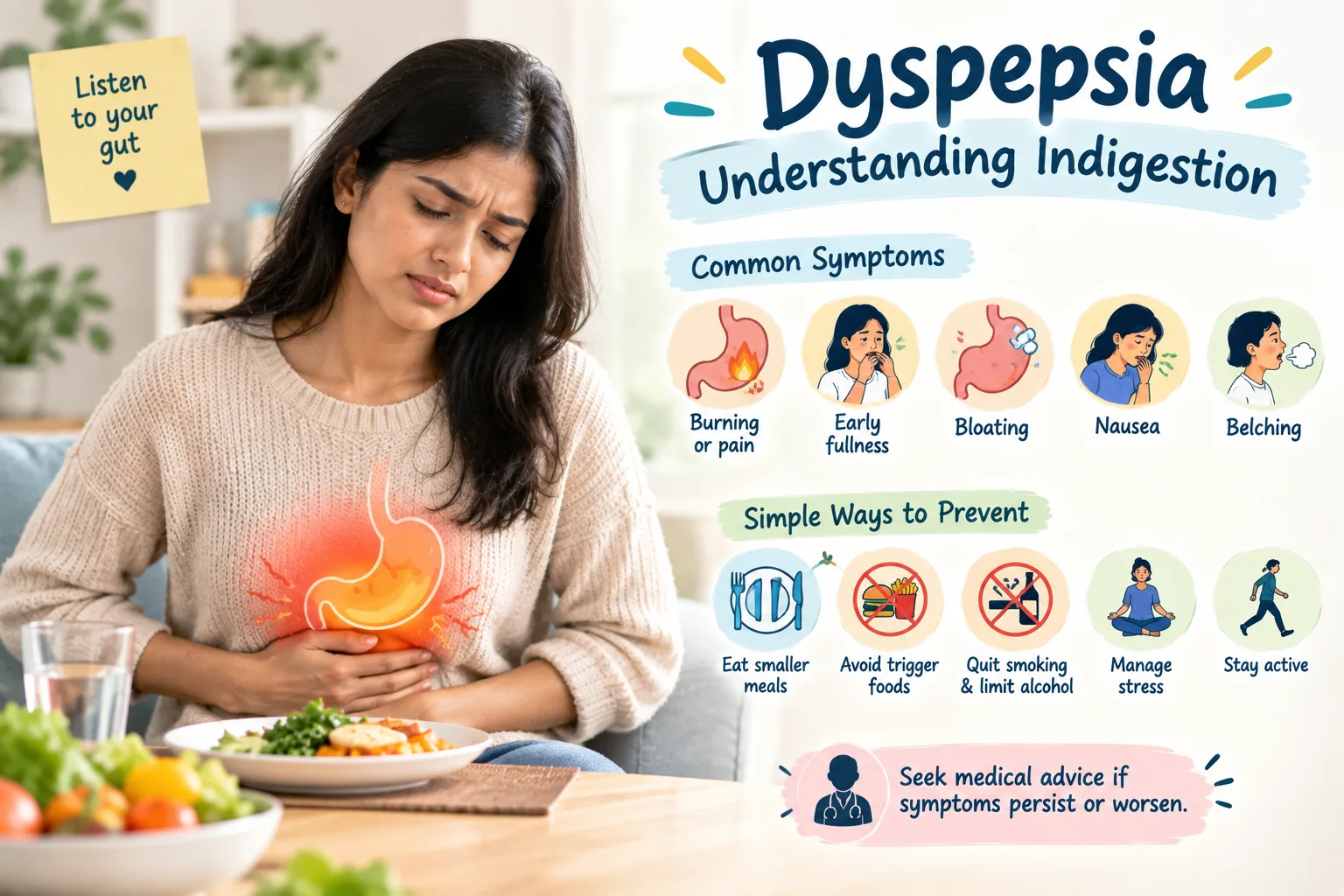
Dyspepsia, commonly called indigestion, refers to discomfort in the upper abdomen. It may involve pain, burning, early fullness, bloating, nausea, or frequent belching. Dyspepsia can occur occasionally or persist over time; when no specific underlying disease is identified, it may be called functional dyspepsia. Although indigestion is often mild, persistent or recurrent symptoms should not be ignored because conditions such as Helicobacter pylori infection, peptic ulcers, gastroesophageal reflux disease, medication-related irritation, or other gastrointestinal problems can cause similar symptoms.
Symptoms: Common symptoms include:
● Pain, burning, or discomfort in the upper abdomen.
● Feeling full soon after starting a meal.
● Uncomfortable fullness after eating.
● Bloating, nausea, or belching.
● Reduced appetite or a sensation of excessive gas. Symptoms may be triggered or worsened by certain foods, medicines, stress, or eating large meals.
Causes and Risk Factors:
Possible causes and contributing factors include:
● Functional dyspepsia, where symptoms occur without an identifiable structural abnormality.
● H. pylori infection.
● Gastritis or peptic ulcer disease.
● Acid reflux or other gastrointestinal disorders.
● Frequent use of nonsteroidal anti-inflammatory drugs, such as ibuprofen or aspirin.
● Certain antibiotics, iron supplements, and other medicines.
● Smoking, alcohol consumption, and excessive caffeine intake.
● Fatty, spicy, or trigger foods.
● Stress, anxiety, or poor sleep.
● Eating quickly, overeating, or lying down soon after meals. The specific trigger differs from person to person. Keeping a food and symptom record may help identify patterns.
Prevention Tips:
● Eat smaller meals and take time to eat slowly.
● Avoid lying down immediately after eating.
● Identify and limit foods or drinks that trigger symptoms, such as fatty foods, fizzy drinks, coffee, or alcohol.
● Avoid smoking and limit alcohol intake.
● Use pain-relief medicines only as directed; ask a healthcare professional about safer options if these medicines worsen symptoms.
● Maintain a healthy weight and regular activity routine.
● Practise stress-management techniques, such as breathing exercises, relaxation, or mindfulness.
● Avoid self-medicating repeatedly with antacids or acid-suppressing medicines without professional advice. There is no single “dyspepsia diet.” Dietary changes should be personalised according to symptom triggers.
When to Consult a Doctor?
Consult a healthcare professional if symptoms:
● Persist, frequently recur, or interfere with daily activities.
● Do not improve with reasonable lifestyle changes.
● Begin after starting a new medicine.
● Are associated with difficulty swallowing, persistent vomiting, or loss of appetite.
● Occur with unexplained weight loss, anaemia, black stools, or vomiting blood.
● Are new or persistent in an older adult, particularly from around 60 years of age.
Seek urgent medical care for severe or sudden upper-abdominal pain, vomiting blood, black tarry stools, fainting, breathing difficulty, sweating, or chest pain especially if pain spreads to the arm, jaw, back, or shoulder. These symptoms may indicate a condition other than indigestion. Doctors may evaluate symptoms using a medical history, examination, H. pylori testing, blood or stool tests, and, when appropriate, upper gastrointestinal endoscopy. Current ACG/CAG guidance recommends endoscopic evaluation for patients aged 60 years or older with dyspepsia, while younger patients may initially undergo non-invasive H. pyloritesting when appropriate.
Treatment Awareness:
Treatment depends on the underlying cause and may include:
● Lifestyle and dietary adjustments.
● Testing and treatment for H. pylori infection when indicated.
● Antacids or other acid-reducing medicines.
● Prescription treatment for gastritis, ulcers, reflux, or other identified conditions.
● Review or modification of medicines that may be irritating the stomach.
● Additional treatment for persistent functional dyspepsia, which may include carefully selected medicines or psychological therapies. Do not start antibiotics to treat suspected H. pylori infection without testing and medical advice.
Treatment choices, duration, drug interactions, and follow-up should be determined by a qualified healthcare professional.
GEWO Health Message:
Listen to your gut, but do not dismiss persistent symptoms. Eat mindfully, identify your triggers, avoid unnecessary self-medication, and seek medical advice when indigestion keeps returning or is accompanied by warning signs.
Medical Disclaimer:
This content is intended for general health education and does not replace consultation, diagnosis, or treatment from a qualified healthcare professional. Dyspepsia can have several causes, and symptoms that resemble indigestion may sometimes indicate a serious medical condition. Seek urgent care for severe pain, chest pain, vomiting blood, black stools, fainting, breathing difficulty, or other alarming symptoms.


