Mental Health
Dyslexia: Understanding the Reading Difference and How to Help?
Dyslexia is a lifelong learning difference that primarily affects reading, spelling, and decoding written language. It is not related to intelligence, poor vision, or lack of effort. Early identification and evidence-based support, especially structured literacy instruction, can improve reading skills and learning outcomes.
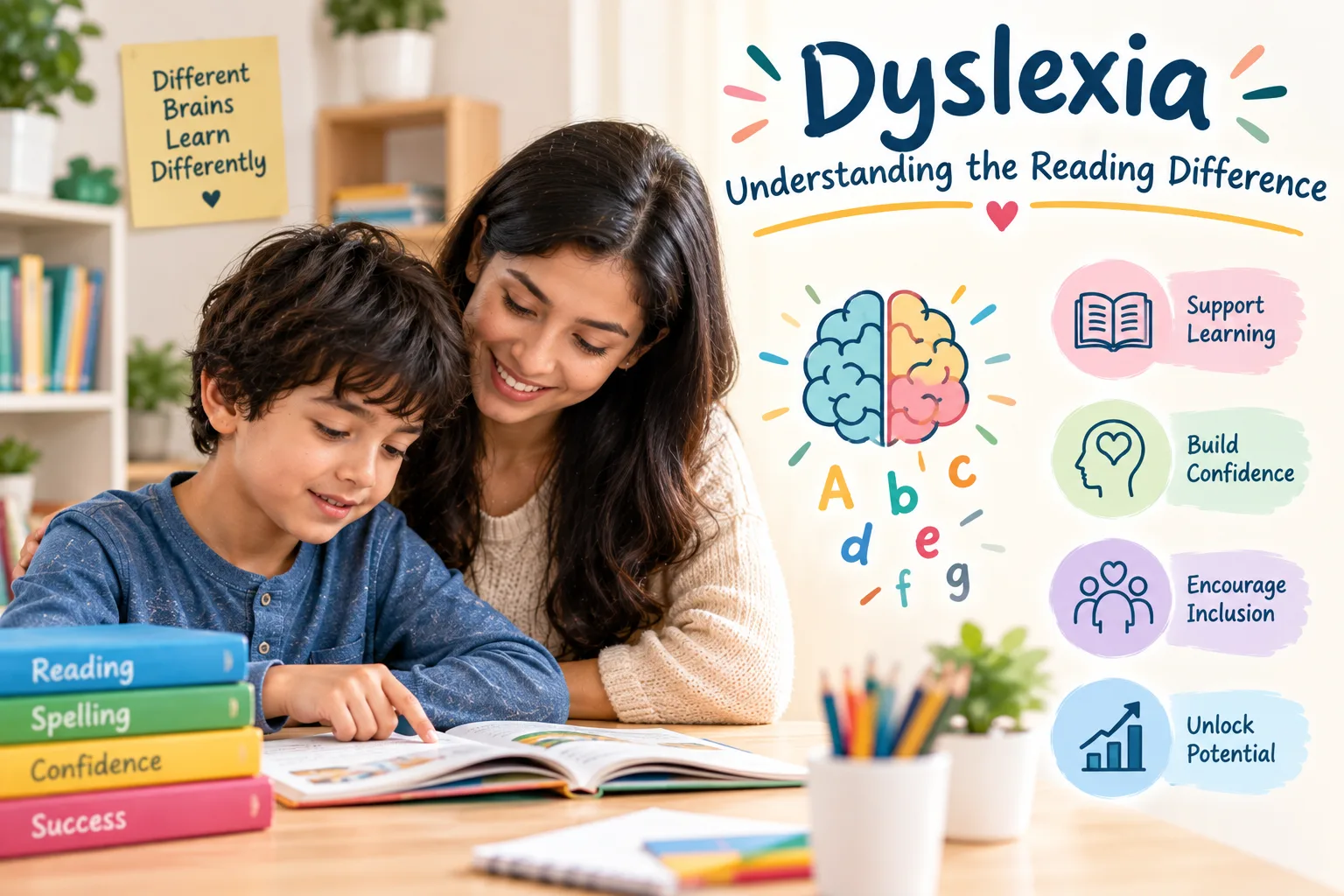
Dyslexia is a common, lifelong learning difference that affects how the brain processes written language. It is not caused by poor vision, low intelligence, or lack of effort. With the right support, people with dyslexia can become strong readers and successful learners.
What Is Dyslexia?
Dyslexia is a specific learning disorder that primarily affects reading, spelling, and decoding (sounding out) words. It is neurobiological in origin, meaning it relates to how the brain is wired for language processing.
Key facts:
Dyslexia affects about 15-20% of people worldwide.
It exists on a spectrum from mild to severe.
It is not related to intelligence, many people with dyslexia have average or above-average IQs.
It is a lifelong condition, but early intervention and appropriate strategies can significantly improve outcomes.
Symptoms of Dyslexia:
Symptoms can appear at different ages and vary in severity. Recognizing early signs helps children get support sooner.
In Preschool Children-
Late talking or slow learning of new words.
Difficulty learning nursery rhymes or recognising rhyming words.
Trouble remembering or naming letters, numbers, and colors.
Mixing up sounds in longer words.
In School-Age Children-
Reading well below the expected level for their age.
Difficulty sounding out unfamiliar words.
Slow, effortful reading and avoiding reading aloud.
Poor spelling, often spelling the same word several different ways.
Confusing letters that look similar (such as b and d) or reversing words.
Trouble following multi-step instructions or remembering sequences.
Difficulty learning a foreign language.
Taking much longer than classmates to finish reading or writing tasks.
In Adults- Many adults with dyslexia were never identified as children.
Persistent difficulty with reading, spelling, or writing.
Avoiding tasks that involve heavy reading.
Feeling frustrated or anxious about literacy tasks.
Relying heavily on memory or context to understand written material.
Causes and Risk Factors:
The exact causes of dyslexia are not fully understood, but research points to differences in how the brain develops and processes language, particularly in areas responsible for phonological processing (recognising and manipulating sounds in words).
Risk Factors:
Family history: Dyslexia often runs in families. Having a parent or sibling with dyslexia increases risk.
Premature birth or low birth weight: These factors may affect brain development.
Prenatal exposures: Exposure during pregnancy to substances such as nicotine, alcohol, or certain drugs that may affect brain development.
Early speech or language delay: Children with delayed language development are at higher risk.
Limited early language exposure: Limited exposure to spoken language, books, and reading activities in early childhood can make an underlying difficulty more noticeable.
Prevention Tips:
Dyslexia cannot be prevented because it is a neurodevelopmental condition. However, early identification and intervention can reduce its impact on learning and self-esteem.
What Parents and Caregivers Can Do?
Read aloud daily: Share books, nursery rhymes, and stories from an early age to build language skills.
Encourage phonological awareness: Play word games, sing rhyming songs, and practice identifying sounds in words.
Create a literacy-rich environment: Keep books, magazines, and writing materials accessible at home.
Monitor early milestones: Pay attention to speech, language, and pre-reading skills. Seek help if your child seems delayed.
Advocate for structured literacy instruction: Evidence shows that explicit, systematic teaching in phonemic awareness, phonics, decoding, and high-frequency words is most effective for children with dyslexia.
When to Consult a Doctor or Specialist?
Seek professional evaluation if:
Your child's reading or spelling is clearly behind that of classmates.
Difficulties have persisted for at least 6 months despite appropriate teaching and extra help.
Your child is becoming distressed, anxious, or reluctant to go to school because of reading tasks.
Your child takes twice as long as peers to finish reading or writing homework.
There is extreme emotional distress over schoolwork or a noticeable drop in academic performance despite consistent effort.
An adult recognizes a long-standing pattern of reading and spelling difficulties affecting daily functioning.
Red Flags That Need Prompt Medical Attention!
Some warning signs are not typical of developmental dyslexia and should be checked promptly by a doctor, because they may point to a different medical problem:
A sudden new difficulty reading, writing, or finding words in a child or adult who could previously do these things normally.
Reading or speech problems that appear after a head injury, seizure, or stroke.
Loss of previously acquired skills, such as speech or reading, in a young child.
Reading difficulty accompanied by headaches, vision changes, weakness, numbness, or confusion.
Signs of significant depression, self-harm, or talk of not wanting to live.
Treatment Awareness:
There is no "cure" for dyslexia, but evidence-based interventions can dramatically improve reading skills and academic success.
What Works:
Structured literacy instruction: Explicit, systematic teaching in foundational skills (phonemic awareness, phonics, decoding, fluency, vocabulary, and comprehension) has the strongest evidence for improving reading outcomes.
Early intervention: The earlier a child receives appropriate instruction, the better the long-term outcomes.
Accommodations and assistive tools: Text-to-speech software, audiobooks, extra time on tests, and note-taking support can help students access the curriculum.
Emotional and psychological support: Counseling, family-school collaboration, and building self-esteem are important, especially for children who have experienced frustration or failure.
What Does Not Have Strong Evidence:
Vision-based treatments (vision therapy, colored overlays, special lenses).
"Dyslexic fonts" or special typefaces.
Cognitive or "brain training" programs marketed for dyslexia.
Clinical guidelines from major medical organisations (including the American Academy of Pediatrics and the American Academy of Ophthalmology) state that dyslexia is a complex neurological condition and that diagnosis and treatment fall within the educational domain, not the visual domain.
GEWO Health Message:
At GEWO Health, we believe that understanding is the first step toward empowerment. Dyslexia is not a limitation, it is a different way of processing language. With early identification, evidence-based teaching, and the right support, individuals with dyslexia can thrive in school, work, and life.
If you or someone you care about shows signs of dyslexia, do not wait. Speak to a pediatrician, school counselor, or learning specialist about an assessment.
Remember: seeking help is a sign of strength, and every learner deserves the opportunity to succeed.
Medical Disclaimer:
This article is for general informational purposes only and does not constitute medical advice, diagnosis, or treatment. Always seek the advice of a qualified healthcare provider or educational specialist with any questions you may have regarding a medical condition or learning difficulty. Never disregard professional medical advice or delay seeking it because of something you have read in this article.


