Mental Health
Autism Spectrum Disorder: Understanding Signs, Support, and Care
Autism Spectrum Disorder (ASD) is a neurodevelopmental condition that can affect communication, social interaction, sensory processing, learning, and behaviour. Every autistic person is different, with unique strengths and support needs. Early recognition and personalised support can improve communication, independence, participation, and quality of life. Autism is not caused by poor parenting or vaccines.
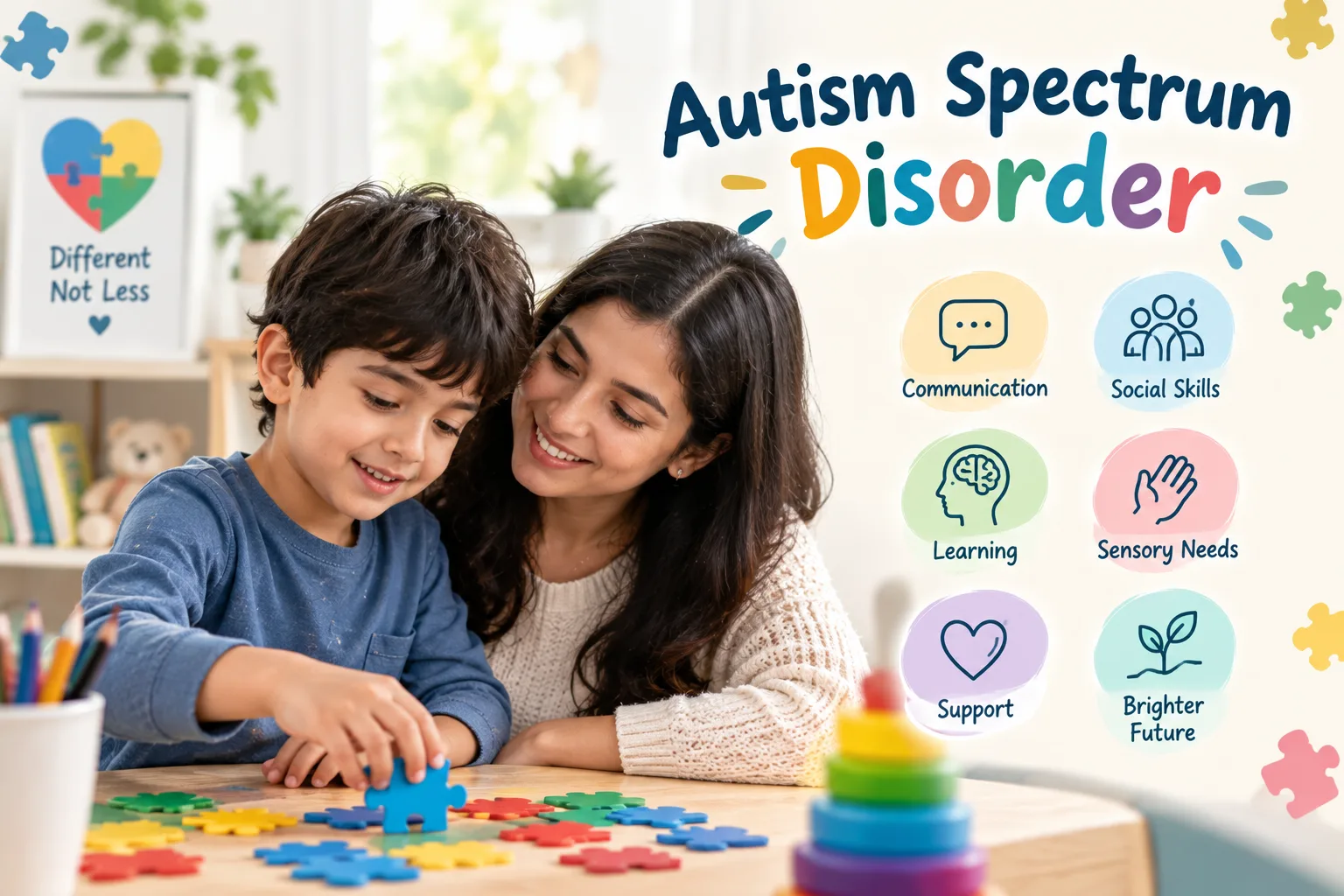
Autism spectrum disorder (ASD), commonly called autism, is a neurological and developmental condition that affects how a person communicates, interacts with others, learns, processes sensory information, and experiences the world. It is called a “spectrum” because autism can affect people in very different ways. Some people may need substantial daily support, while others may live independently but experience challenges with communication, sensory sensitivity, or social situations. Autism is not an illness caused by poor parenting, a lack of affection, or personal weakness. It is not contagious, and vaccines do not cause autism. Early recognition and appropriate support can help children and adults develop communication, learning, self-care, and social skills while improving quality of life. Healthcare professionals can often identify autism reliably by around age 2, although diagnosis may occur later in childhood, adolescence, or adulthood.
Symptoms:
Autism-related characteristics usually begin in early childhood, although they may become more noticeable when social and educational demands increase. Symptoms vary from person to person and may change over time.
1. Social communication and interaction A person with autism may:
● Make limited, inconsistent, or unusual eye contact.
● Not respond consistently when their name is called.
● Have difficulty starting or maintaining a conversation.
● Find it challenging to understand facial expressions, gestures, tone of voice, humour, or sarcasm.
● Speak mainly about a preferred topic without noticing whether others are interested.
● Have difficulty sharing interests, emotions, or enjoyment with other people.
● Prefer solitary play or find it difficult to join group activities.
● Experience challenges in developing or maintaining friendships. Not every autistic person avoids eye contact or has delayed speech. Some may speak fluently but struggle with the social aspects of conversation.
2. Repetitive behaviours and restricted interests
Other possible characteristics include:
● Repeating movements such as hand-flapping, rocking, spinning, or jumping.
● Repeating words or phrases, sometimes called echolalia.
● Strongly preferring routines and becoming distressed by unexpected changes.
● Developing intense interests in particular subjects or activities.
● Playing with objects in repetitive ways, such as lining them up.
● Being unusually sensitive or under-sensitive to sounds, lights, textures, smells, tastes, pain, or movement.
For example, a child may become very distressed when a familiar route to school changes, cover their ears in a noisy environment, or focus deeply on trains, maps, numbers, or another special interest. Some developmental warning signs include not responding to their name by 9 months, using few gestures by 12 months, not pointing to share interest by 18 months, and not joining other children in play by 3 years. These milestones are useful prompts for discussion, not a diagnosis by themselves.
Causes and Risk Factors:
The exact cause of autism is not fully understood. Current evidence suggests that autism results from a combination of genetic and developmental factors affecting brain development. Many different genes may contribute, and autism can occur with or without a known family history. Factors associated with a higher likelihood of autism may include:
● Having a sibling or close relative with autism.
● Certain genetic or chromosomal conditions.
● Some complications during pregnancy or birth.
● Older parental age.
● Being born very prematurely or with a very low birth weight.
These factors do not mean that a child will definitely develop autism. In many cases, no single cause can be identified. Autism is not caused by vaccines, routine childhood immunisations, parenting style, or a lack of parental love.
Prevention Tips:
There is currently no guaranteed way to prevent autism, and parents should not blame themselves if their child is autistic. The most helpful approach is to support healthy development and identify concerns early. Families can:
● Attend routine antenatal and child-health visits.
● Follow medical advice during pregnancy and manage health conditions appropriately.
● Avoid alcohol, tobacco, and non-prescribed drugs during pregnancy.
● Take prescribed medicines only after discussing their benefits and risks with a healthcare professional.
● Ensure children receive recommended vaccinations; vaccines do not cause autism.
● Monitor developmental milestones and share concerns promptly.
● Provide safe opportunities for talking, playing, reading, movement, and interaction.
● Maintain predictable routines while gradually teaching children how to cope with safe, manageable changes. Prevention tips should never be interpreted as a way to “cure” or eliminate autism.
The goal is healthy development, early support, and respect for the individual’s needs.
When to Consult a Doctor?
Speak with a paediatrician, family doctor, developmental specialist, or child psychologist if a child:
● Loses language, social, or other previously acquired skills.
● Does not respond to their name or rarely uses gestures.
● Shows little interest in people or interactive play.
● Has significant speech or communication difficulties.
● Repeats movements or activities frequently.
● Becomes extremely distressed by small changes in routine.
● Has unusual reactions to sounds, touch, food textures, lights, or movement.
● Has difficulty functioning at home, school, or in social settings.
Adults should also seek professional assessment if lifelong difficulties with communication, relationships, sensory experiences, routines, or social situations affect work, education, or daily life. Diagnosis is based on developmental history and professional observation; online questionnaires can raise a concern but cannot confirm autism.
Treatment Awareness:
There is no single treatment that suits every autistic person. Support should be personalised, respectful, and focused on communication, independence, participation, comfort, and quality of life. Helpful interventions may include:
● Speech and language therapy for communication and language development.
● Occupational therapy for daily living skills, sensory needs, coordination, and participation.
● Educational support and individualised learning plans.
● Behavioural and developmental interventions that teach useful skills through positive, respectful approaches.
● Social-skills support when appropriate.
● Parent and caregiver training.
● Psychological support for anxiety, emotional regulation, or coping with stress.
● Treatment of coexisting concerns such as sleep problems, epilepsy, attention difficulties, gastrointestinal symptoms, anxiety, or depression.
Medicines do not treat the core features of autism, but a doctor may prescribe medication for particular associated symptoms or coexisting conditions, such as severe irritability, anxiety, sleep difficulties, seizures, or attention problems. Families should be cautious about unproven “cures,” restrictive diets, supplements, chelation, or therapies that promise to reverse autism. The CDC notes that current treatments aim to reduce symptoms affecting daily functioning and quality of life, and no medication treats the core symptoms of ASD. Autistic people should be included in decisions about their care whenever possible. Support should recognise strengths, communication preferences, sensory needs, dignity, and individual goals.
GEWO Health message:
Notice developmental differences early, seek professional guidance without delay, and support every person with patience, respect, and acceptance. Autism does not define a person’s abilities, identity, or future. Early, individualised support and an inclusive environment can help autistic people participate, learn, communicate, and thrive.
Medical Disclaimer:
This article is for general health education only and does not replace consultation with a qualified healthcare professional. Autism cannot be diagnosed from this article or from an online checklist. Developmental concerns, regression, seizures, severe distress, or sudden changes in behaviour require professional assessment. Treatment decisions should be made with an appropriately qualified doctor or multidisciplinary healthcare team. Never start, stop, or change medicines, supplements, or restrictive diets without medical advice.


